
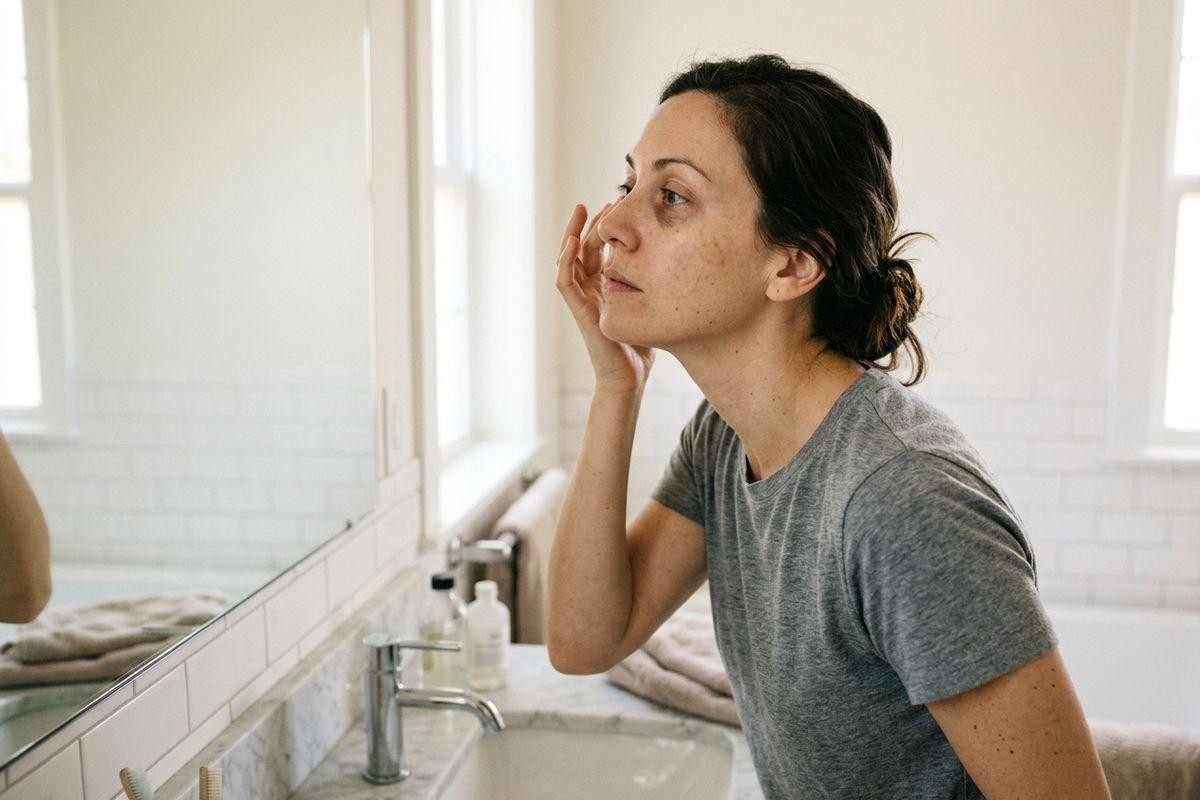
You catch your reflection after a long day and notice a shadow beneath each eye. Even after a restful night, the area may still look sunken or tired. This change can come from the shape of your face, natural volume loss, or short-term factors.
Under-eye hollowing often comes from age-related volume loss, genetics, facial structure, major weight changes, or temporary effects from sleep and hydration.
How Under-Eye Hollows Change Your Appearance
An under-eye hollow is a groove between your lower eyelid and upper cheek. The groove may cast a curved shadow that becomes more visible under bright overhead lights. In softer light, that same shadow may seem less clear.
You may notice these signs when you look in a mirror or take a photo.
- Makeup that collects along the groove under your eye
- A dip that feels smooth rather than raised
- Thin-looking skin and a tired look around your eyes
Hollows can affect each side of your face in a different way. One side may look deeper because facial structure is rarely identical from side to side.
Main Causes of Under-Eye Hollows
Age & Natural Volume Loss
Your facial fat, bone, and skin support change over time. As fullness decreases, the space between your eyelid and cheek can become more noticeable. Your skin may also look thinner, which can reveal more color beneath your eyes.
These changes often happen slowly. You may first notice them in photos, under office lights, or near a sunny window.
Genetics & Facial Structure
Your natural eye depth and cheek shape can create hollows at almost any age. Deep-set eyes may cast stronger shadows. Flatter upper cheeks may also add contrast beneath your lower eyelids.
If close family members have similar features, genetics may play a role. This doesn’t mean your skin is unhealthy. It may simply reflect the structure you inherited.
Weight, Habits & Short-Term Factors
Major weight loss can reduce fullness across your cheeks and under-eye area. Poor sleep or dehydration may deepen shadows for a short time. These factors can make an existing groove easier to see.
- Allergies may add darkness beneath your eyes
- Sun exposure may deepen visible color
- Smoke exposure may affect how the area looks
Hollows, Dark Circles, & Eye Bags
Under-Eye Hollows
A hollow has a clear dip or groove. Its shadow often changes as you move your face or step into different light. The skin inside the groove may keep its usual color.
Dark Circles
Dark circles may look brown, blue, or purple, and unlike a shadow, the color may remain visible in bright and soft light. Thin skin, pigment, sun exposure, or allergies may contribute.
Eye Bags
Eye bags create a raised or puffy area beneath your eyes. The puffiness may sit above or beside a hollow. A raised bag can cast a shadow that makes the nearby groove look deeper.
You can have hollows, dark circles, and bags at the same time. A careful assessment helps separate each concern before you choose care.

Your Options for Under-Eye Hollows
At-Home Care
Regular sleep and steady hydration may soften shadows caused by short-term factors. Daily sun protection can help limit added darkness. Creams can support the look and feel of your skin, but they don’t replace lost volume.
In-Office Treatments
Skin boosters such as Sculptra can gradually restore volume in the cheeks and midface, which can soften the transition into the under-eye area. For thin, delicate-looking skin, Rejuran® skincare may help support skin quality. Pico laser may help with pigment-related dark circles, while radiofrequency microneedling (RFMN) can improve skin texture. Your facial features, skin, and goals guide which options suit you.
The under-eye area needs a thoughtful approach. More product doesn’t always create a more natural result, so Dr. Kung assesses the full cheek and eye area.
If loose skin or prominent eye bags are deepening the shadows, Dr. Kung can discuss whether a surgical consultation may be worth considering.
Your Assessment With a Dermatologist in New York
What Dr. Kung Checks
Dr. Kung checks your volume, skin color, puffiness, and skin quality. Different light can help separate true pigment from a shadow. As your dermatologist in New York City, she can also review your goals, schedule, and current skin routine.
Bring photos if the hollow seems to change throughout the day. Clear details can help Dr. Kung see what you see at home.
Reasons for Prompt Care
Some changes deserve timely attention. Seek prompt care if you notice any of these signs.
- Your hollows appear suddenly or change quickly
- Your under-eye area becomes swollen, tender, or discolored
- Your eye changes come with pain or nasal pressure
Future Bright Dermatology offers personalized skin care in Lower Manhattan, led by Yale- and Harvard-trained Dr. Kung. Feel at ease in our hands.
Schedule an assessment to explore what shapes your under-eye area and which options may help you look more rested.